The wars between the Taliban and Hizb-e-Islami
- Among the Afghan Mujahideen that the US had created with the help of Pakistan was the Hezb-e-Islami organization of engineer Gulbuddin Hekmatyar.
- Hezb-e-Islami also played an important role in the Afghan civil war.
- When the Taliban rose under the leadership of Mullah Omar, just as the Taliban had eliminated the Afghan Mujahideen organizations, of which Hezb-e-Islami is the leader, the Taliban eliminated their organizations, power, and government from all over Afghanistan.
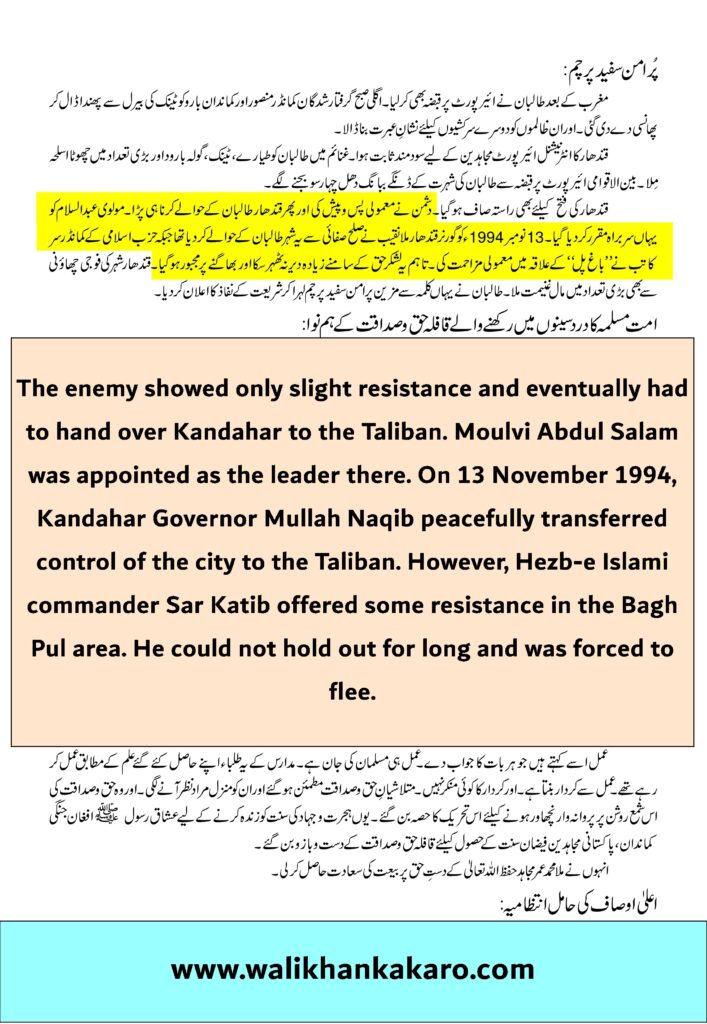
The enemy showed only slight resistance and eventually had to hand over Kandahar to the Taliban. Moulvi Abdul Salam was appointed as the leader there. On 13 November 1994, Kandahar Governor Mullah Naqib peacefully transferred control of the city to the Taliban. However, Hezb-e Islami commander Sar Katib offered some resistance in the Bagh Pul area. He could not hold out for long and was forced to flee.
Book: فاتح طالبان
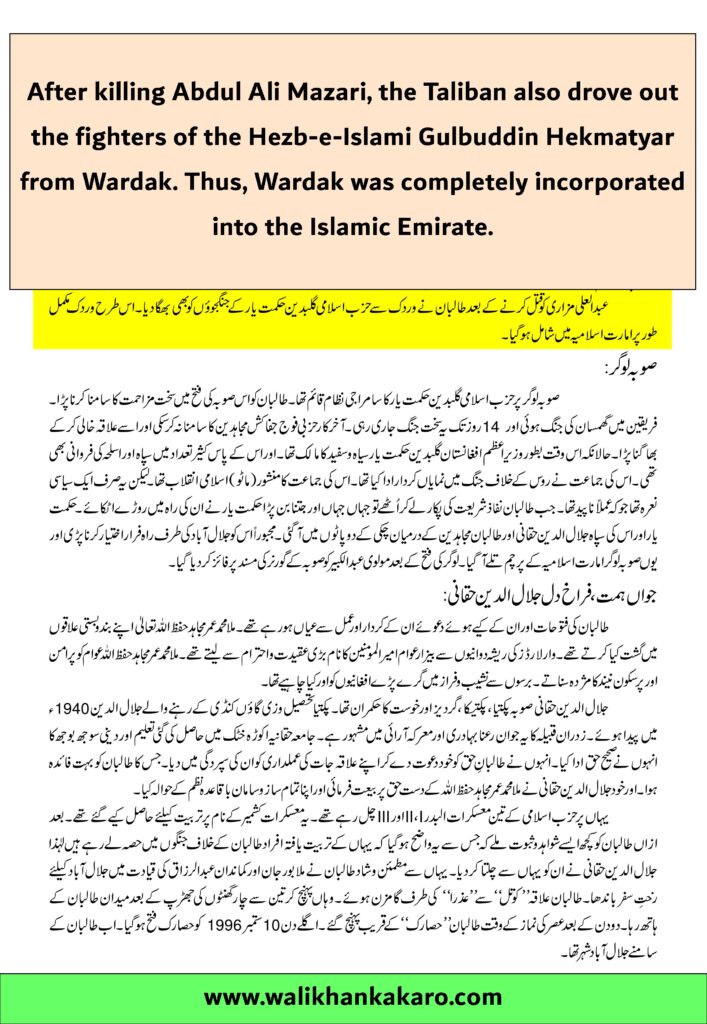
After killing Abdul Ali Mazari, the Taliban also drove out the fighters of Hezb-e Islami, led by Gulbuddin Hekmatyar, from Wardak. Thus, Wardak was completely incorporated into the Islamic Emirate.
Book: فاتح طالبان
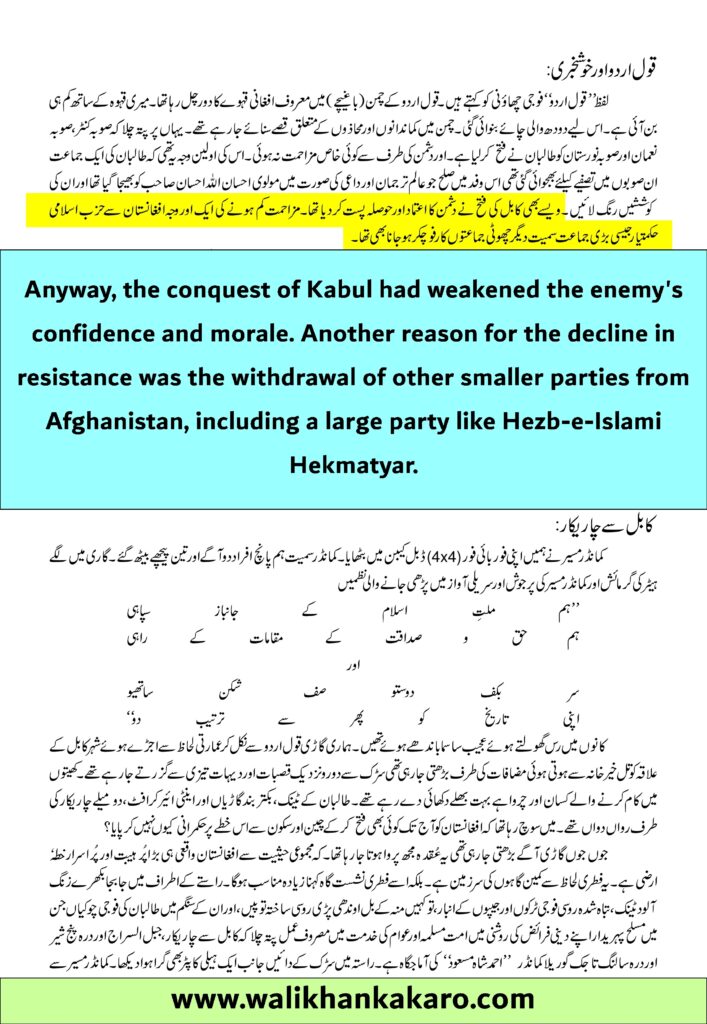
Anyway, the conquest of Kabul had weakened the enemy’s confidence and morale. Another reason for the decline in resistance was the withdrawal of other smaller parties from Afghanistan, including the large faction of Hezb-e-Islami, led by Gulbuddin Hekmatyar.
Book: فاتح طالبان